The relationship between alcohol concentration and the speed at which liquid forms "legs" or tears on the side of a glass—commonly referred to as the "wine legs" phenomenon—has long fascinated both scientists and enthusiasts. This effect, driven by surface tension and the Marangoni effect, creates a visually striking display in beverages like wine or spirits. While it may seem like a simple party trick, the physics behind it reveals a complex interplay between ethanol content, water, and other dissolved compounds.
Surface tension, at its core, is the elastic tendency of liquids to minimize their surface area. In alcoholic beverages, this property is heavily influenced by the concentration of ethanol. Pure water has a high surface tension, while pure ethanol has a significantly lower one. When mixed, the resulting surface tension depends on the ratio of these two components. Interestingly, this relationship is not linear. At certain concentrations, the mixture exhibits unexpected behaviors that affect how the liquid clings to the glass.
The formation of legs occurs when alcohol evaporates faster than water, creating a surface tension gradient. As ethanol dissipates from the thin film of liquid on the glass, the remaining liquid becomes richer in water, increasing local surface tension. This gradient pulls liquid upward along the glass, forming droplets that eventually succumb to gravity and slide back down. The speed at which this happens depends on how quickly the tension imbalance develops, which is directly tied to the initial alcohol concentration.
Researchers have found that mid-range alcohol concentrations, typically between 12% and 20% by volume, produce the most pronounced and slowest-moving legs. Below this range, the ethanol content is too low to create a strong enough tension differential. Above it, the liquid's viscosity and evaporation dynamics change, causing faster but less distinct streaks. This explains why fortified wines like port exhibit different leg behavior compared to lighter table wines.
The temperature of the liquid and the surrounding environment further complicate this relationship. Warmer conditions accelerate ethanol evaporation, intensifying the Marangoni effect but potentially making the legs move faster. Glassware design also plays a role—the curvature and cleanliness of the surface affect how the liquid film forms and climbs. Even subtle factors like air humidity can influence the phenomenon, making precise predictions challenging outside controlled settings.
Beyond alcoholic drinks, understanding these surface tension dynamics has practical applications in industries ranging from coating technologies to inkjet printing. The same principles that create visually appealing legs in a wine glass govern how functional fluids behave when deposited on surfaces. By studying one, researchers gain insights that apply to the other, demonstrating how fundamental physics manifests in both aesthetic and technical domains.
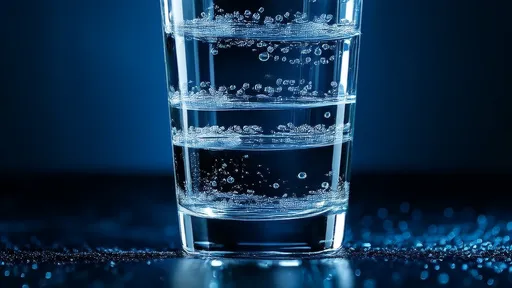
For those curious about observing these effects at home, a simple experiment can demonstrate the relationship. Try pouring samples of water, vodka, and wine into identical glasses, then watch how each behaves. The water will show minimal legs, the vodka may form fast-moving streaks, and the wine should produce slow, well-defined tears. This hands-on approach makes the invisible forces of surface tension suddenly visible and tangible.
While the wine legs phenomenon has inspired numerous myths about alcohol quality or sweetness, the truth lies in fluid dynamics rather than subjective taste factors. The next time you notice those elegant droplets tracing their path down your glass, you're witnessing a beautiful demonstration of physics in action—one where alcohol concentration writes the script and surface tension directs the performance.
By /Jul 17, 2025
By /Jul 17, 2025
By /Jul 17, 2025
By /Jul 17, 2025
By /Jul 17, 2025
By /Jul 17, 2025
By /Jul 17, 2025
By /Jul 17, 2025
By /Jul 17, 2025
By /Jul 17, 2025

By /Jul 17, 2025
By /Jul 17, 2025
By /Jul 17, 2025
By /Jul 17, 2025

By /Jul 17, 2025
By /Jul 17, 2025
By /Jul 17, 2025
By /Jul 17, 2025
